What has happened to the art world? Is it still struggling with the aftermath of the pandemic, or are we all quietly dealing with its lingering effects?
Let’s be clear: the production of art has exploded. But this growth feels less like a creative renaissance and more like an industry—driven by trends, markets, and a race to produce more. In the process, art has lost something vital: its essence. And what is that essence? It’s expression and emotion—the heart of what makes art meaningful.
I recently visited an exhibition—if you can even call it that—and left feeling confused and disappointed. The curation was poor, with artworks hung carelessly, as if the space was an afterthought. It felt less like an art exhibition and more like a social media event. I couldn’t help but feel sorry for the artists, whose works were displayed like odd decorations, stripped of their potential impact.
This shift toward mass production hasn’t just affected artists; it’s changed the entire ecosystem. Galleries, curators, and dealers are all caught in a cycle of endless art fairs, biennales, and pop-up markets. It’s overwhelming, especially in the Middle East, a region of contrasts—rich in culture but plagued by conflict, poverty, and inequality. You’d think the surge of art events would bring people together, spark conversations, and open minds. And it has—but only for a small, privileged few.
Then there’s the issue of repetition. The same artists, and sometimes even the same artworks, are in different locations under different names. Where are the fresh voices? Where are the works that challenge us to think differently? Why do so many galleries in the Middle East ignore emerging artists? Why must independent artists act as their own promoters, marketers, and salespeople, when their focus should be on creating? This system is why so few are truly innovating, while most are just producing.
Let me be clear: this isn’t the artists’ fault. The problem lies with the structures around them. In one word: greed.
Greed kills creativity and discourages risk-taking.
The exhibition I mentioned didn’t trigger this critique—it’s the result of years of observation and growing disappointment. I’ve seen artists give up because they lacked support: no gallery representation, no interest from collectors. I’ve seen emerging artists copy established styles to meet market demands, losing their originality in the process. I’ve seen fraud, stagnation, and a lack of innovation. I’ve seen the Beirut Art Fair move to Paris, a stark reminder of the region’s instability. I’ve seen countless new art fairs and biennales in Saudi Arabia, Qatar, Bahrain, and the UAE—which, while impressive, feel overcrowded and repetitive. I’ve attended art events in Kuwait that barely made a ripple, unnoticed by anyone outside the artists’ immediate circle.
What we’re witnessing is a critical moment for the art world. It’s a time that should inspire creativity, challenge outdated systems, and break down the barriers between the elite and the public. It’s a chance to revive the essence of art: expression and emotion. Last but not least, kudos to some galleries, artists, writers and patrons who are keeping what is left of this essence alive.
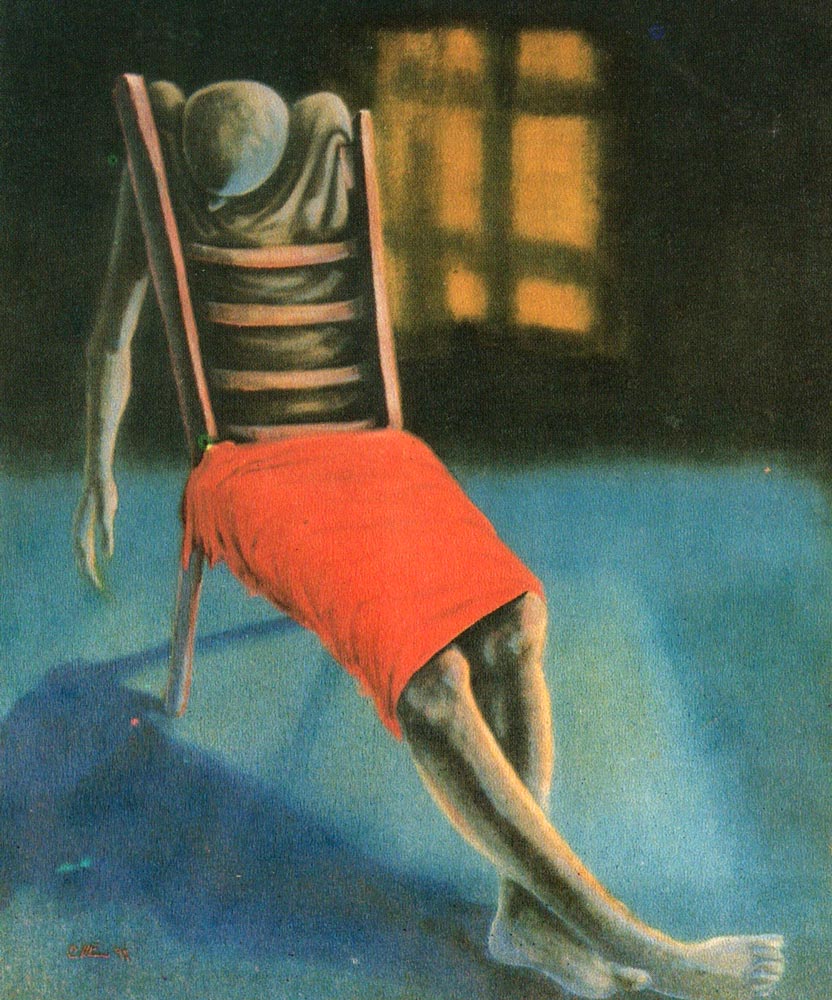
 Al Mahha Art